

When your roof is due for replacement, and you’re weighing a metal roof vs. shingle roof in Wichita Falls, the choice comes down to more than budget and looks.
Wichita Falls sits near the dry line, where moist air from the Gulf meets dry air moving in from the west. That collision fuels the hail and wind that roll through this part of North Texas, often before the same storms move on toward Dallas or Fort Worth. According to Interactive Hail Maps, the area has logged 128 hail reports and been under severe weather warnings 76 times over the past 12 months, with the heaviest activity from March through June. Before you settle on a material, it helps to know how each one performs against what your roof deals with every spring and summer.
How Shingle Roofs Hold Up Here
Asphalt shingles remain the most common roofing choice across Texas, and for good reason. They’re affordable, familiar, and straightforward to repair. Here’s how they hold up in this climate:
- Typical lifespan: 15 to 30 years, with basic shingles at the shorter end and architectural or Class 4 impact-resistant shingles at the longer end
- Wind exposure: high winds lift and curl shingle edges, especially along ridgelines and eaves
- Hail exposure: impacts bruise the granule layer, weakening a shingle’s ability to shed water even when it looks intact from the ground
- Best practice: choosing a Class 4 impact-resistant product and checking your roof after every significant storm goes a long way toward getting the full lifespan out of the material
With the right product and a little upkeep, shingles can still be a solid, budget-friendly option even in a corridor this active.
How Metal Roofs Hold Up Here
Metal roofing performs differently because it’s built to handle the conditions that wear shingles down fastest. Here’s what that looks like in practice:
- Wind rating: standing-seam and other quality metal systems commonly carry ratings around 140 to 160 mph, well above what shingles are rated for
- Lifespan: typically 40 to 70 years with proper installation and basic maintenance
- Hail performance: metal can dent under a hard hit, but that’s usually cosmetic and rarely affects the roof’s ability to keep water out
- Energy impact: the reflective surface can reduce attic heat buildup, easing cooling costs during Wichita Falls summers
- Tradeoff: installation typically costs about two to three times what shingles do, and requires a contractor with real metal roofing experience, since a poorly installed system can leak at seams or fastener points
The higher upfront cost buys you a roof built to shrug off exactly what this area throws at it, with far less to worry about in between storms.
Shingle vs. Metal at a Glance
| Factor | Asphalt Shingles | Metal Roofing |
| Typical lifespan | 15 to 30 years | 40 to 70 years |
| Wind rating | Lower, more prone to lifting | Commonly 140 to 160 mph |
| Hail performance | Can crack or lose granules | Usually dents without leaking |
| Upfront cost | Lower | 2 to 3 times higher |
| Maintenance | Regular, ongoing | Minimal |
Weighing Cost Against How Long You’ll Stay
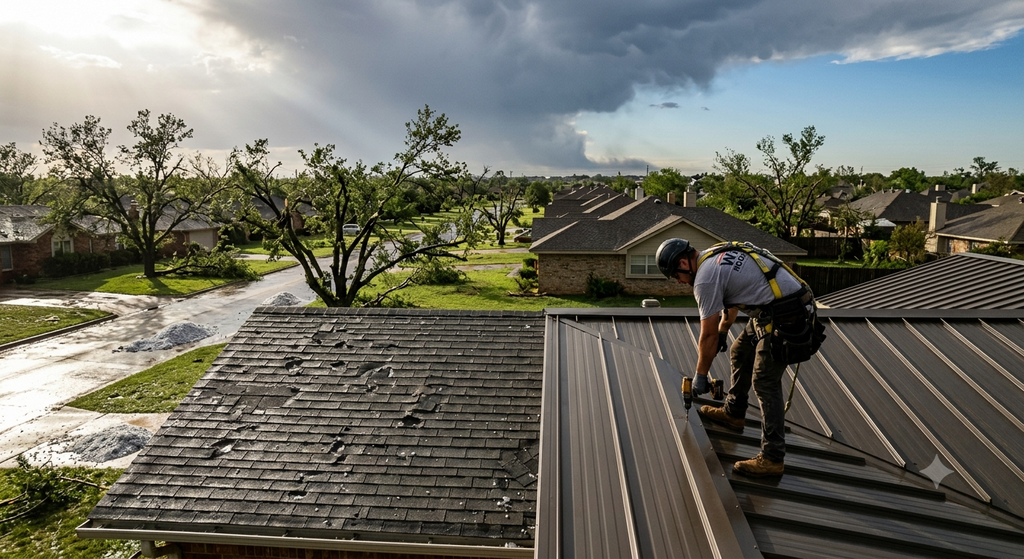
The upfront cost gap is real, but it looks different once you factor in how often each material needs replacing. Shingles cost less to install but may need replacement more than once over a few decades in a climate this active. Metal costs more upfront but often needs replacing once, if ever, over that same stretch.
If you expect to sell within the next several years, shingles’ lower upfront cost is often the more practical choice. If you plan to stay for decades, metal’s durability tends to close the cost gap over time.
Maintenance You Can Expect
Shingle roofs need more regular attention: clearing gutters, resealing flashing, replacing damaged shingles after storms, and watching for granule loss or algae growth. These small repairs add up over a 15- to 20-year span, both in cost and in the number of times you’re calling a contractor.
Metal roofs need far less. Occasional gutter cleaning and a fastener check every few years usually covers it, since the material resists the wind, moisture, and sun damage that wear shingles down over time.
Choosing the Right Contractor for Either Option
Whichever material you choose, the installation matters as much as the product. Check for a physical local address rather than just a call center number, manufacturer certifications for the material being installed, and references from storm damage jobs, not just routine replacements. A written scope that spells out underlayment, flashing, and ventilation, not just shingles or panels, tells you the contractor is thinking about the whole system rather than a quick patch. A contractor who installs residential roofing in Wichita Falls, TX every day already knows which permits the city requires for a reroof, how local wind-rating standards apply to shingles versus metal, and what this area’s past storms have exposed in other contractors’ shortcuts.
Key Takeaways
- Shingles cost less upfront and typically last 15 to 30 years in this climate.
- Metal costs more upfront but commonly lasts 40 to 70 years with far less maintenance.
- Metal generally handles Wichita Falls wind and hail better, denting instead of cracking.
- The right choice depends mostly on your budget and how long you plan to stay in the home.
Your Next Step
Material choice matters here. Whether you go with Class 4 impact-resistant shingles or standing-seam metal, installed and documented properly by a roofing company Wichita Falls homeowners trust, it will hold up against this corridor’s wind and hail far better than a generic statewide spec.
Not sure which option is right for your roof? Schedule a free, no-obligation inspection with RoofGurus.
Visit https://theroofgurus.com/wichita-falls-tx-roofing/ to learn more about residential roofing in Wichita Falls, TX. Call 940-292-3055 to schedule an inspection. 401 US 281 Suite 6, Wichita Falls, TX 76310. info@theroofgurus.com
Frequently Asked Questions
How long does a metal roof last compared to shingles?
Metal roofs commonly last 40 to 70 years, while quality asphalt shingles typically last 15 to 30 years, depending on the grade and how much wind and hail exposure they see.
Can metal roofs handle Wichita Falls hail and wind?
Generally, yes. Metal roofing is commonly rated for winds up to 140 to 160 mph and tends to dent rather than crack under hail, while shingles often need repair or replacement after a significant hit.
How much more does a metal roof cost than shingles up front?
Metal typically runs about two to three times the cost of a shingle roof to install, though the exact gap depends on your roof size and the metal system you choose.
Do I need a specialized contractor for metal roofing?
Yes. Metal roofing installation is different from shingle work, and a poorly installed system can develop leaks at seams or fastener points. Look for a contractor with specific metal roofing experience and manufacturer certifications.