

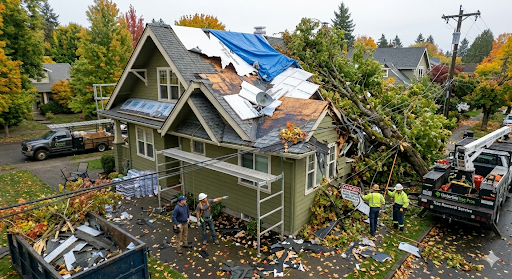
If you’ve lived through even one spring in the Texas Panhandle, you already know the routine. A blue sky turns black by 4 p.m., the wind picks up, and twenty minutes later your backyard is covered in hailstones the size of quarters. Then comes the silence, and the slow walk outside to see what just happened to your roof.
Storm damage in Amarillo and Wichita Falls is not a question of if but when. Between April and June, supercell thunderstorms regularly drop golf-ball to softball-sized hail across the region, and Wichita Falls alone has logged dozens of hail and wind events in recent years. Knowing what to do in the hours and days after a storm is the difference between a quick fix and a five-figure repair bill. Here’s how to handle it the right way.
What Storm Damage Actually Looks Like on a Panhandle Roof
Most homeowners look up after a storm, see no missing shingles, and assume they got lucky. That’s the most expensive mistake you can make.
Hail damage often hides in plain sight. Look for bruised shingles (soft spots that feel like a bruised apple), granule loss collecting in your gutters or downspouts, cracked vent boots, and dented metal flashing around chimneys and skylights. Wind damage shows up as lifted or curled shingle edges, broken seals, and exposed nails. If you see dents on your gutters, AC unit fins, garage door, or window screens, your shingles took the same hits.
Your First 48 Hours After the Storm
What you do in the two days after a storm shapes everything that follows, including your insurance claim.
Step 1: Document Everything from the Ground
Stay off the roof. Walk the perimeter of your house with your phone and take wide shots and close-ups of every dented surface, including the AC condenser, fence, gutters, and outdoor furniture. Date-stamped photos build the foundation of a successful insurance claim.
Step 2: Stop Active Leaks Without Making It Worse
If water is coming through the ceiling, place a bucket underneath and poke a small hole in the bulging drywall to release the pressure. A bulging ceiling can collapse and cause far more damage than a controlled drain. Do not climb up and tarp the roof yourself in wet or windy conditions.
Step 3: Call a Local Roofing Pro Before You Call the Insurance Adjuster
This order matters. A licensed inspector who works in Amarillo and Wichita Falls every week knows exactly what hail damage looks like on a Panhandle roof and can prepare an accurate scope of work. When the adjuster shows up, you’ll have documentation that matches reality. If you’re searching for roof repair in Amarillo,TX after a storm, prioritize contractors who offer free post-storm inspections with written reports.
Repairs That Actually Last in This Climate
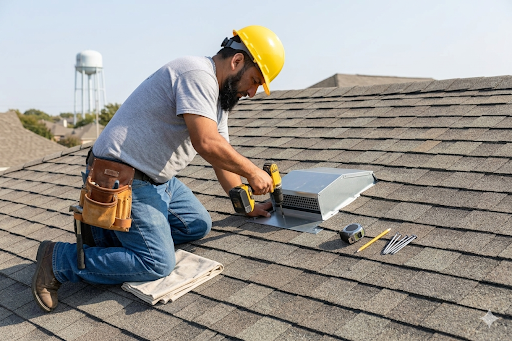
Amarillo roofs deal with 20°F winters, 110°F summers, 60+ mph winds, and recurring hail. A patch job that looks fine in May can fail by August. Repairs worth paying for include:
- Full shingle replacement in any field area with three or more bruised shingles, not just spot patches
- New vent boots and pipe collars since cracked rubber is the number one source of slow leaks
- Re-sealed and replaced flashing around chimneys, skylights, and roof-to-wall transitions
- Re-nailed ridge caps because Panhandle winds find every loose nail
Ask your contractor about Class 4 impact-resistant shingles when replacement is on the table. Many insurance carriers offer premium discounts for the upgrade, and they hold up dramatically better in hail country.
Choosing the Right Roofing Contractor After a Storm
After a major hail event, out-of-state “storm chasers” flood Amarillo and Wichita Falls. They knock on doors, offer to “handle everything with your insurance,” and disappear before the next season. Avoid the headache by working only with established roofing contractors in Amarillo, TX who have a physical local address, verifiable references, and proper Texas licensing and insurance.
A reputable roofing company will give you a written estimate, photo documentation of damage, a clear timeline, and a manufacturer-backed warranty. They’ll also meet your insurance adjuster on-site rather than asking you to handle the negotiation alone.
Don’t Wait Until the Next Storm Rolls In
Hail-damaged roofs don’t heal themselves. Granule loss accelerates UV breakdown, micro-fractures widen with every freeze-thaw cycle, and a slow leak can ruin attic insulation and drywall long before you spot a water stain. The faster you get a qualified inspection, the cheaper the repair.
If a storm just rolled through your neighborhood, schedule a free roof inspection with The Roof Gurus today. Our local team knows Panhandle weather, works directly with your insurance carrier, and stands behind every repair we make.
Frequently Asked Questions
How soon should I get my roof inspected after a hailstorm in Amarillo?
Within 7 to 14 days. Most insurance policies have time limits on storm claims, and early documentation makes the claim process far smoother. Hidden damage also gets worse with every subsequent rain.
Will my homeowner’s insurance cover storm-related roof repair in Texas?
In most cases, yes. Standard Texas homeowner’s policies cover wind and hail damage, but you’re responsible for your deductible and for filing within the policy’s time window. A local contractor can help you understand what’s covered before you file.
What size hail causes roof damage?
Hail as small as 1 inch (about the size of a quarter) can damage asphalt shingles. By the time you see golf-ball-sized hail, which is common in Amarillo and Wichita Falls, damage is almost certain even if it’s not visible from the ground.
Should I repair or replace my roof after major storm damage?
It depends on the age of the roof and the extent of damage. If your roof is under 10 years old with isolated damage, repair usually makes sense. For roofs over 15 years old or with widespread hail bruising, replacement is typically the better long-term investment, and insurance often covers it.